Insight · Solar
How we approached solar electrical works for 120 terrace houses in Setia Alam
When an entire terrace estate goes solar, the story is as much about sequencing and electrical readiness as it is about panels on the roof.
The scale changes the method
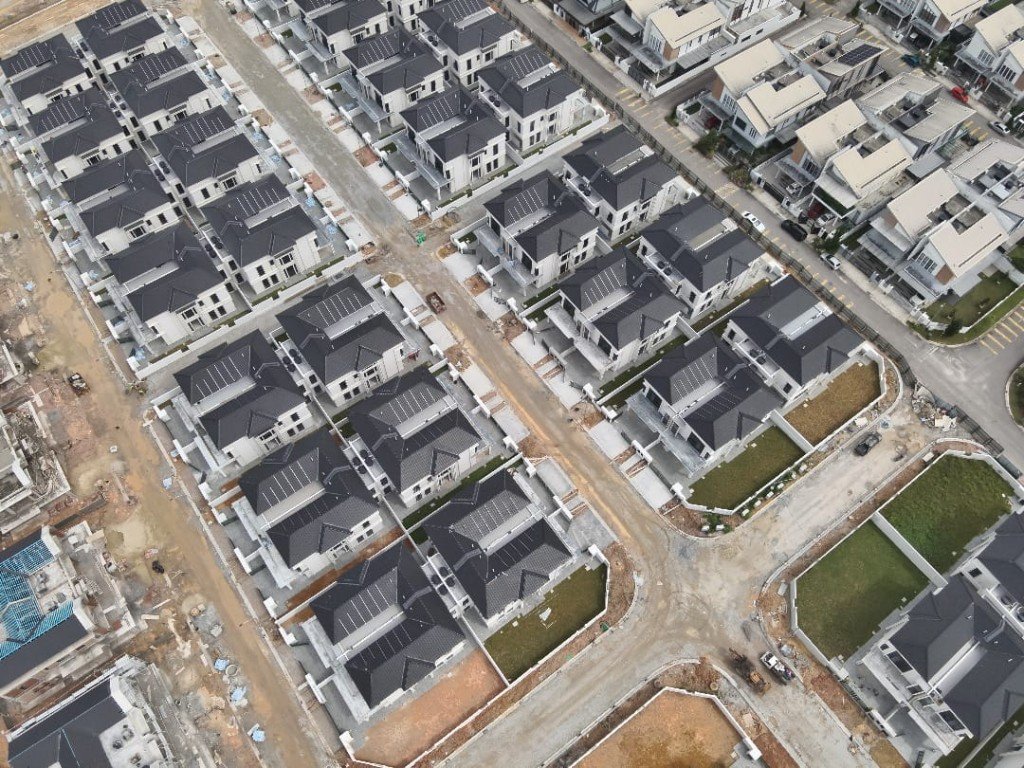
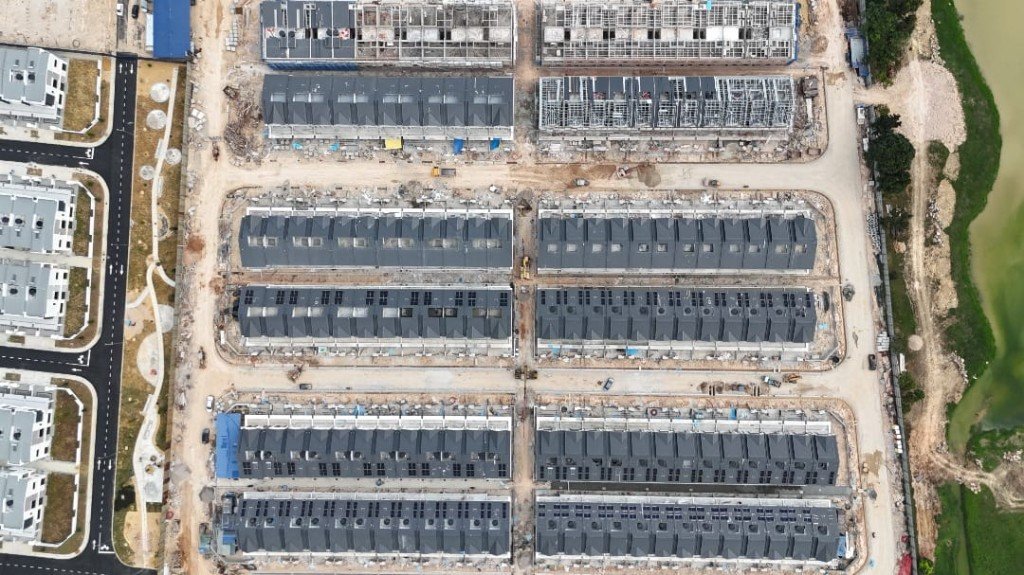
One terrace house with a rooftop array is a contained job. 120 terrace houses is a programme: repeating layouts, shared access windows, and a construction site that is still moving. The drone shots from Setia Alam show finished solar rows beside blocks that are still skeleton and truss — that is the reality of estate solar.
Elektrika’s role on programmes like this centres on the electrical side of solar: making sure each unit is ready for PV, that cable routes are tidy and protected, and that testing and documentation keep pace with handover — often alongside a SEDA-registered PV partner for the module works. See our solar installation page for how that partnership is framed.
What “ready for solar” means on a terrace estate
- Consistent unit design — repeating terrace types need repeating electrical interfaces, not one-off improvisation on every roof.
- Construction sequencing — arrays go on when roofs and access allow; electrical isolation and DB readiness must not block the builder’s critical path.
- Safe cable routes — UV-exposed runs, penetrations and containment planned so they survive Malaysian weather and estate maintenance.
- Documentation for handover — owners and the developer need clear records when hundreds of panels sit across a neighbourhood.
What the photos show
From above, Setia Alam’s new terraces read as a grid: dark roofs, uniform panel banks, roads and landscaping still catching up. That uniformity is the point — estate solar only works when every house in a block is treated as part of one system of work, not 120 disconnected renovations.
You can also see active plant and unfinished edges in the wider frame. Large residential solar sits inside a construction environment: dust, access limits, temporary roads. Planning electrical works for that environment is half the job.
Lessons for developers and owners
- Decide solar early enough that DB sizing, earthing and roof structure assumptions are not reverse-engineered after tiling.
- Align PV and electrical crews to the same block programme — chasing completed houses one by one costs more and looks messier.
- Ask for a clear split of responsibilities: who owns modules and mounting, who owns the electrical interface, who signs testing forms.
See the project gallery
Photos and a short project summary live under our Solar category: Solar panel installation for 120 terrace houses in Setia Alam.