Insight · Solar · EV
Integrating solar PV and an EV charger in a Kuala Lumpur home
In dense KL housing, solar and EV charging succeed when the roof arrays, inverter wall and charger circuit are treated as one electrical job — not two unrelated add-ons.
One wall, two loads that must get along
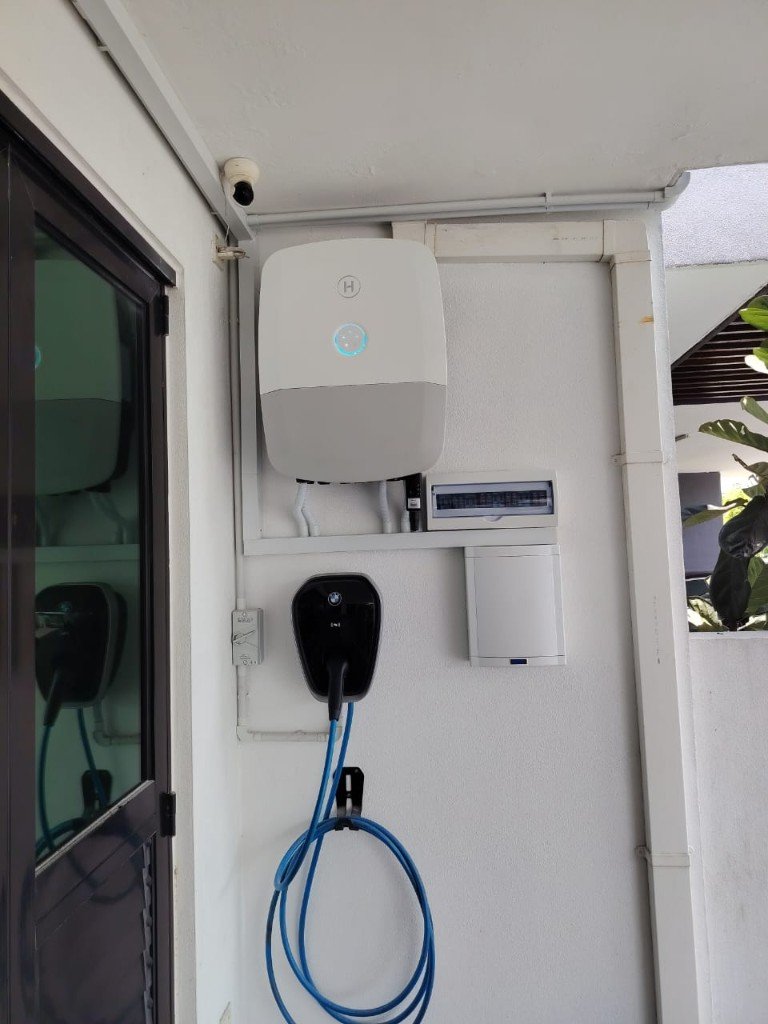
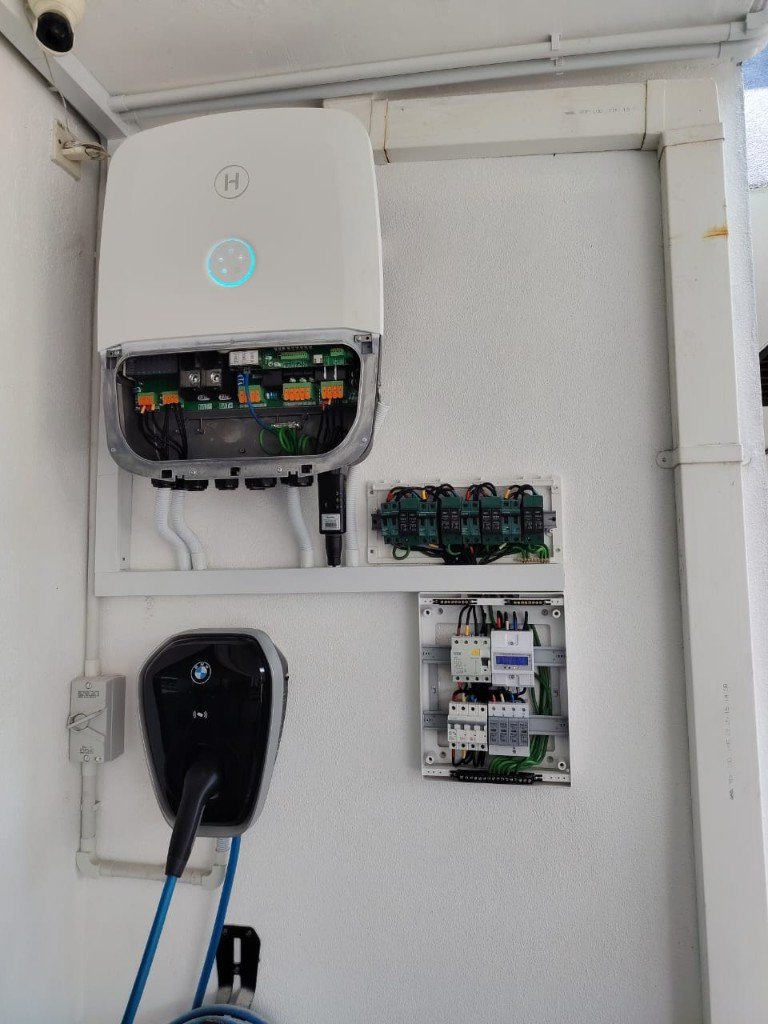
Homes adding both rooftop PV and an EV charger often discover the hard way that the interesting work is on the wall: inverter AC/DC interfaces, surge and isolation, metering or power sensing, and a dedicated charger circuit that will not nuisance-trip the rest of the house. This Kuala Lumpur install shows that stack clearly — Huawei inverter above, BMW Wallbox below, distribution and protection boards to the side, all tied with white trunking.
Elektrika’s focus on jobs like this is the electrical integration: containment, DB layout, earthing and testing so generation and charging are safe to live with day to day. Module and charger brands vary by project; the discipline of tidy routes and correct protection does not. See solar installation and EV charging for how we frame those scopes.
What “tidy” buys you on a residential wall
- Readable fault-finding — labelled breakers and neat trunking mean the next service visit is faster and safer.
- UV and weather discipline — outdoor-adjacent garage or utility walls need containment that still looks finished after monsoon seasons.
- Space for protection — SPDs, isolators and sensing gear need board space planned up front, not squeezed in after the inverter arrives.
- Owner confidence — a closed, orderly wall is what handover photos should look like, not temporary loops of cable.
Roof reality in dense KL housing
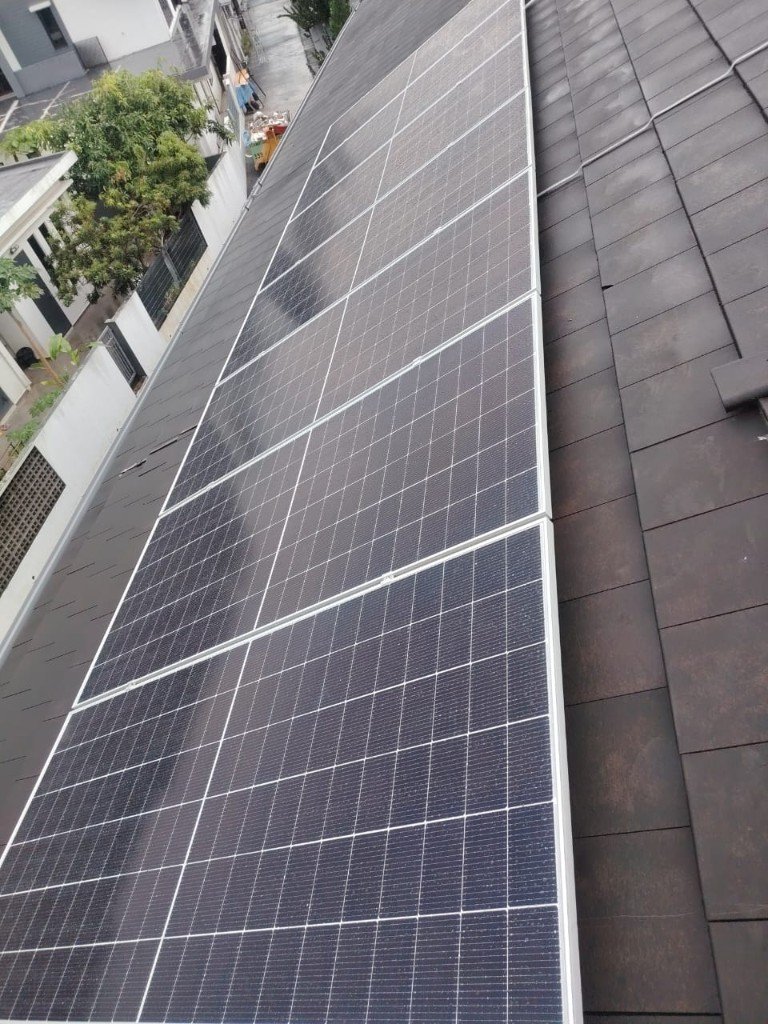
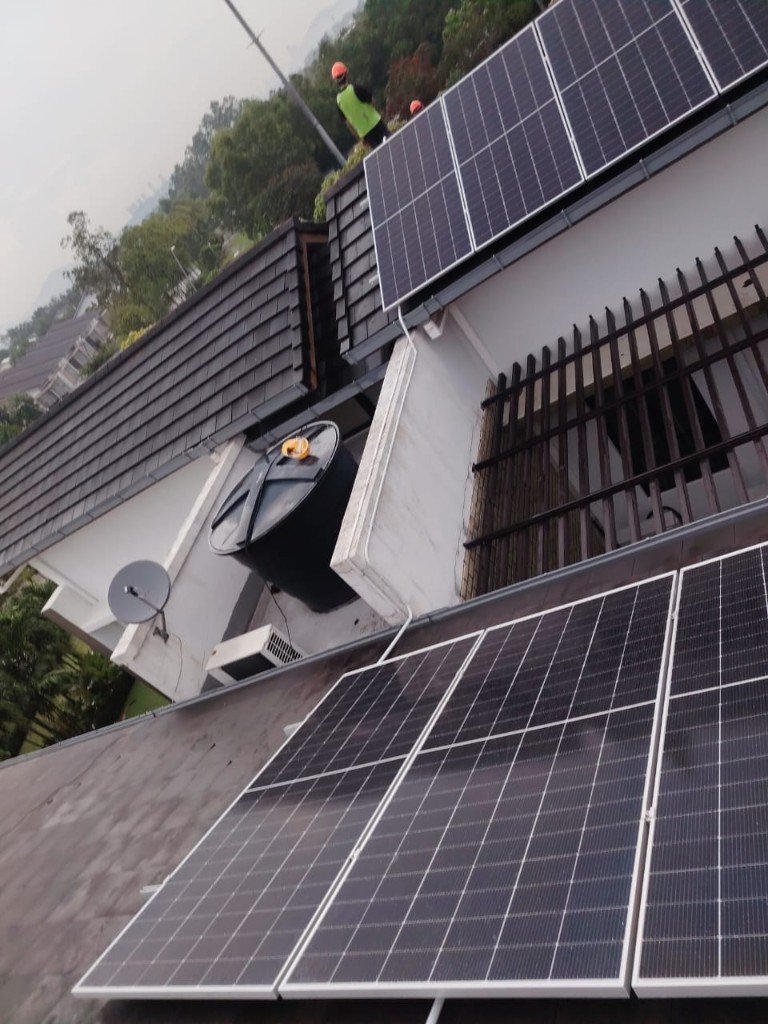
The gallery roofs are fragmented: dark tiles on one plane, another array a level up, conduit tracing white walls between them. That is normal in Kuala Lumpur suburbs — multi-level roofs, tanks, AC condensers and neighbour setbacks constrain where panels can sit. Crews in PPE on those planes are a reminder that the electrical story starts with safe access and cable routes that survive the climb down to the inverter.
Planning PV strings and home-run paths before cutting penetrations keeps the finished wall as clean as the photos of the commissioned Huawei and BMW gear.
Lessons for KL homeowners
- Decide charger location and solar inverter wall together — chasing power later usually means a messier second trunking run.
- Ask what protection lives in the solar/EV sub-boards (isolation, SPD, earth) and how it ties to the main DB.
- Share roof photos from multiple levels early; KL houses rarely offer one perfect plane.
See the project gallery
Photos and a short project summary: Solar PV and EV charger installation in Kuala Lumpur.