Insight · Solar
Fitting solar PV around a complex Semi-D roof in Johor Bahru
On a real Semi-D, the roof is never empty. Tanks, solar thermal, vents and multiple pitches decide where panels can go — and how the electrical side has to be planned.
Multi-plane roofs change the layout
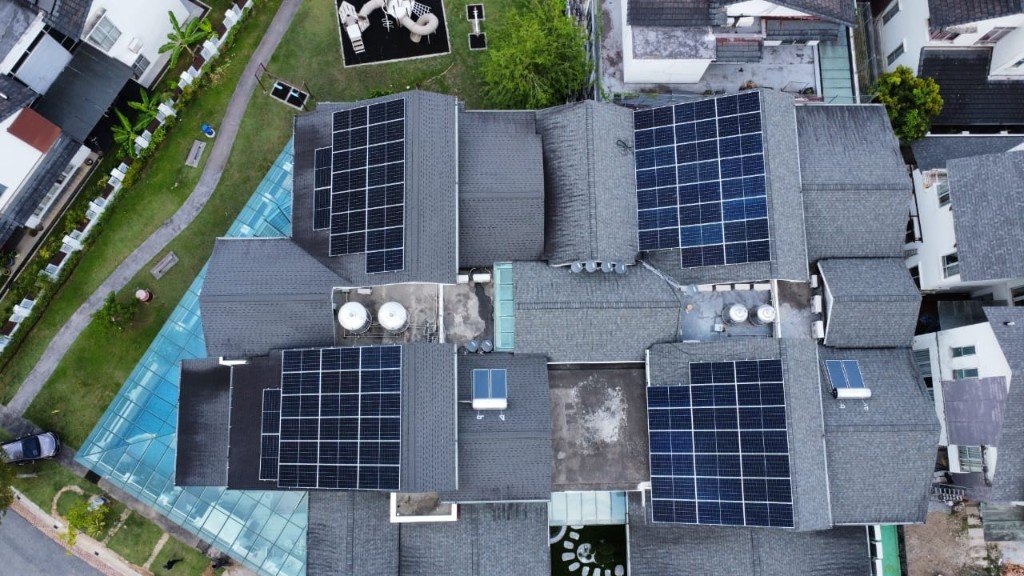
Estate terraces often share one repeating roof type. A Semi-D in Johor Bahru is different: peaks, valleys and flat sections force the array into several smaller banks instead of one continuous field. The birds-eye shot of this house shows that clearly — dark panels packed across four roof planes, maximising usable area without fighting the architecture.
That layout only works when electrical stringing, isolation and cable routes are designed for the same geometry. Long messy DC runs across valleys are harder to protect and maintain; cleaner routes from each plane down to the inverter and DB keep the system serviceable for years.
Working around tanks and solar thermal
This roof already carried two large silver water tanks, a horizontal solar thermal heater and assorted vents. PV had to be placed around that plant — not over it — so owners keep water heating capacity and safe access for maintenance.
- Clearance for tanks — arrays stop short of vessel footprints and walkways so servicing stays possible.
- Respect existing thermal — solar thermal stays in place; PV fills the remaining planes rather than replacing every roof appliance.
- Penetrations and UV runs — cable paths planned so Malaysian sun and rain do not punish shortcuts through cluttered roof zones.
Residential Semi-D electrical readiness
Panels on the tiles are only half the job. For a landed Semi-D, Elektrika focuses on the electrical interface: DB capacity and isolation for PV, earthing continuity, tidy AC/DC interfaces and documentation the owner can keep with the house papers. Module mounting is typically done with a SEDA-registered PV partner; the electrical readiness is what makes the system safe to live with. Our solar installation page explains that split.
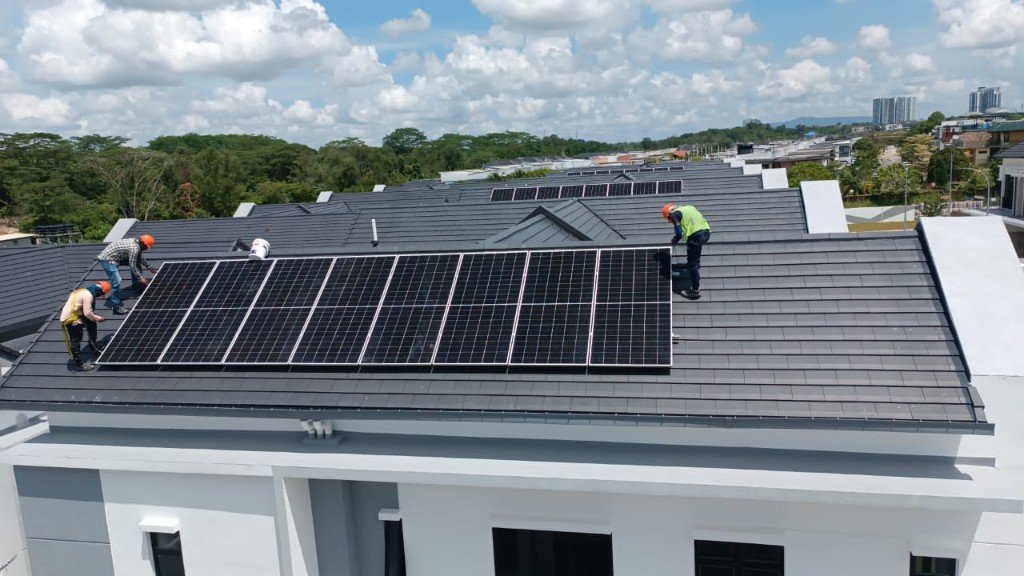
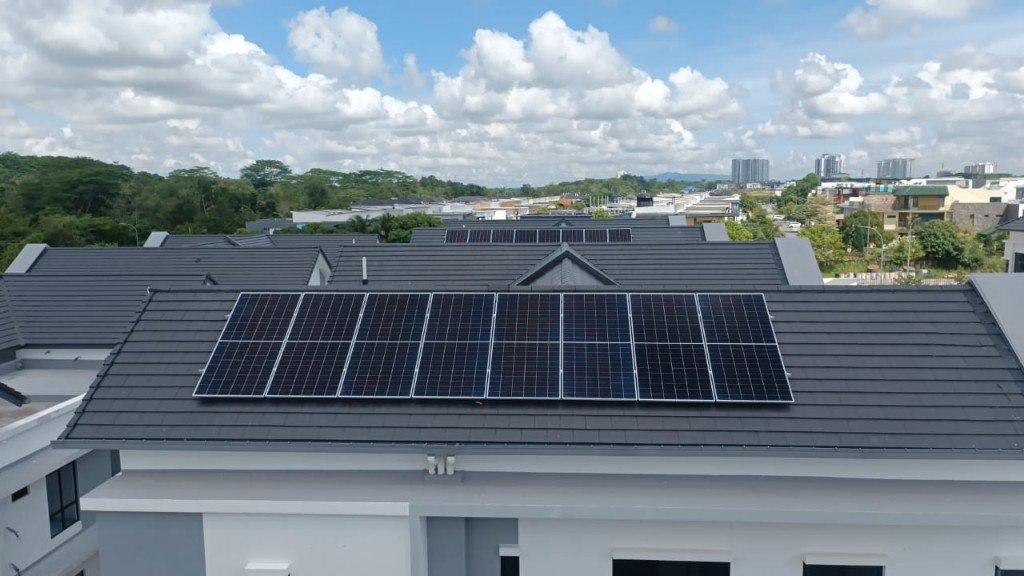
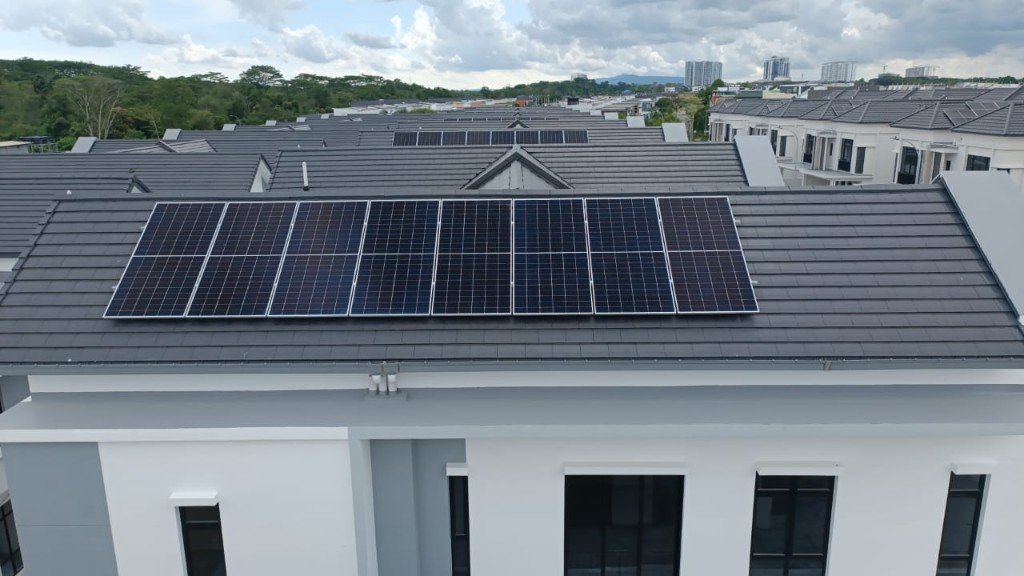
Neighbourhood installs in the same area — neat eight-panel rows on modern grey-tiled Semi-Ds — show the smaller end of the same discipline: one clean bank, racking aligned to the pitch, and a house that is electrically ready before energisation.
Neighbourhood context
From the drone, you see matching roofs stretching down the street, a pocket park, and high-rises on the horizon — typical Johor Bahru landed housing. Solar here is not an industrial shed; it has to look intentional from the street and sit calmly beside neighbours who may install next. Uniform dark arrays on grey tiles help that, whether the house carries sixty-plus panels across many planes or a single eight-panel bank.
Lessons for Semi-D owners
- Photograph the whole roof — tanks, thermal, skylights and shade — before asking for a quote; layout hinges on those obstacles.
- Ask how strings and cable routes will handle multiple roof planes, not only how many panels fit on the largest face.
- Confirm who owns electrical readiness (DB, isolation, earthing, testing) versus module mounting and SEDA paperwork.
See the project gallery
Photos and a short project summary live under our Solar category: Solar PV installation for a Semi-D in Johor Bahru.