Insight · TNB supply
Applying for TNB supply for a new house: what homeowners need to know
Most homeowners deal with TNB only once: when the keys are handed over and the meter is still missing. The process is simpler than people fear, provided the right person submits it and the paperwork is complete.
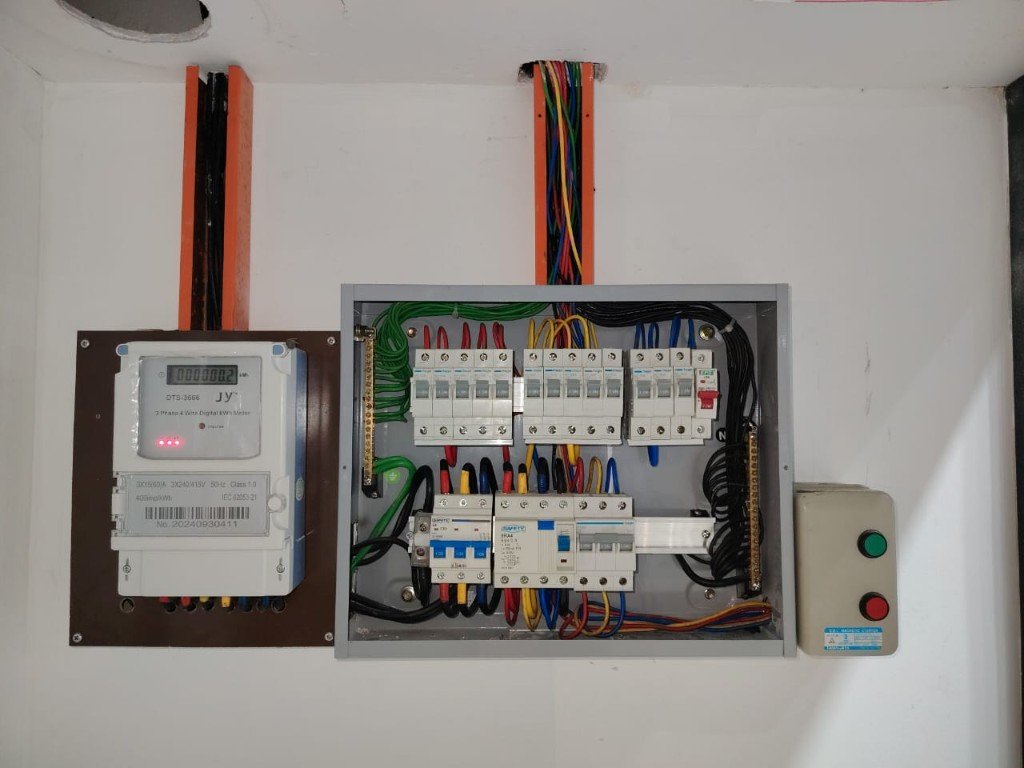
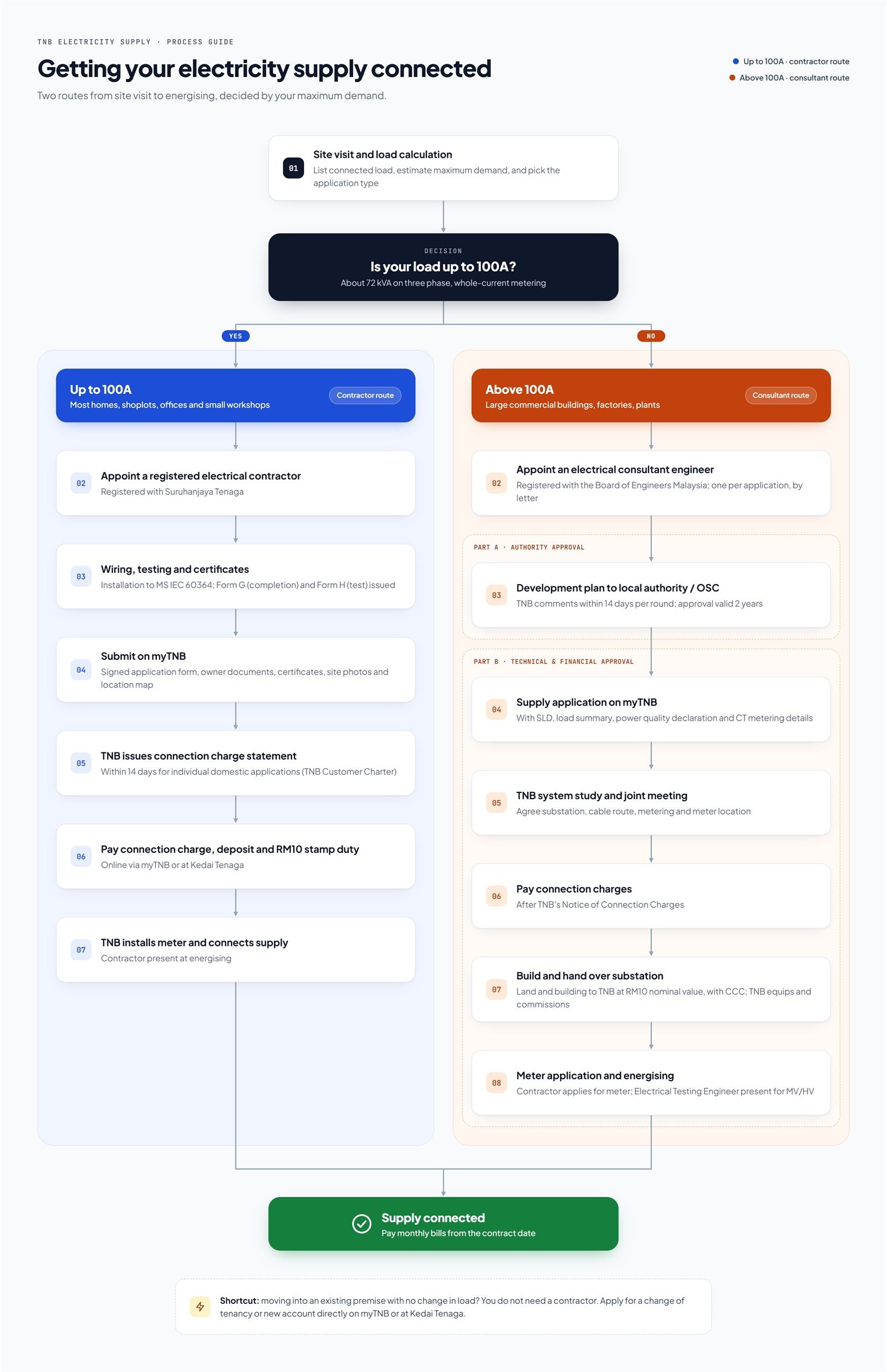
Do you need a contractor?
It depends on what you are doing.
- New house with no TNB account, renovation that adds load, or a move to three phase: yes. TNB accepts these applications only from an electrical contractor registered with Suruhanjaya Tenaga. The contractor certifies that your wiring is safe before TNB connects it.
- Moving into an existing house with no change in load: no. You can open the account or change the name yourself on myTNB or at Kedai Tenaga.
Single phase or three phase?
TNB supplies homes at single phase 230V for a maximum demand of up to 12 kVA, and at three phase 400V above that, up to 72 kVA (100A) on a whole-current meter.
Single phase is enough for a typical terrace house. Three phase starts to make sense when you add several large loads that run at the same time:
- four or more air-conditioners
- an instant water heater or a large storage heater
- an electric oven or induction hob
- an EV charger above 7 kW
- a large pool pump or a lift
A load calculation settles the question in one site visit. Upgrading later means a second application, new test certificates and another round of TNB charges, so it is cheaper to decide correctly at the renovation stage.
Documents you provide
- Completed and signed TNB application form
- Copy of your IC
- Proof of occupation: the first, second and last pages of your S&P agreement, a tenancy agreement page showing your name and the address, or the land or strata title
Your contractor adds the technical documents: Form G (completion certificate), Form H (test certificate), a location map and photos of the meter position and the nearest TNB supply point.
What you pay TNB
- Connection charge: based on the maximum demand you declare, plus cable charges if TNB has to extend its network to you
- Deposit: two months of estimated electricity bills
- Stamp duty: RM10
These go to TNB and are separate from your contractor’s fee. Homes on the domestic tariff do not pay TNB’s power factor surcharge.
How long it takes
TNB’s Customer Charter targets a connection charge statement within 14 days of a complete individual domestic application, and meter installation within 5 working days of your deposit payment. Most delays come from missing documents or wiring that fails inspection. Both can be avoided.
The short version
- Get a load calculation before you renovate.
- Appoint a contractor registered with Suruhanjaya Tenaga.
- Have your IC and S&P pages ready.
- Pay the connection charge, deposit and stamp duty on myTNB.
- TNB installs the meter.
Need supply for a new house or a three-phase upgrade? See our TNB supply application service or WhatsApp us for a site visit.
Sources: TNB Electricity Supply Application Handbook (ESAH); TNB, Supply Application for Housing Developers & Electrical Contractors; ESAH Appendix 2; TNB Customer Charter; TNB Application for Electricity Supply form and Terms and Conditions.